Who Can Afford to Stay at Home?
A stay-at-home mom…in this economy? I don’t know her
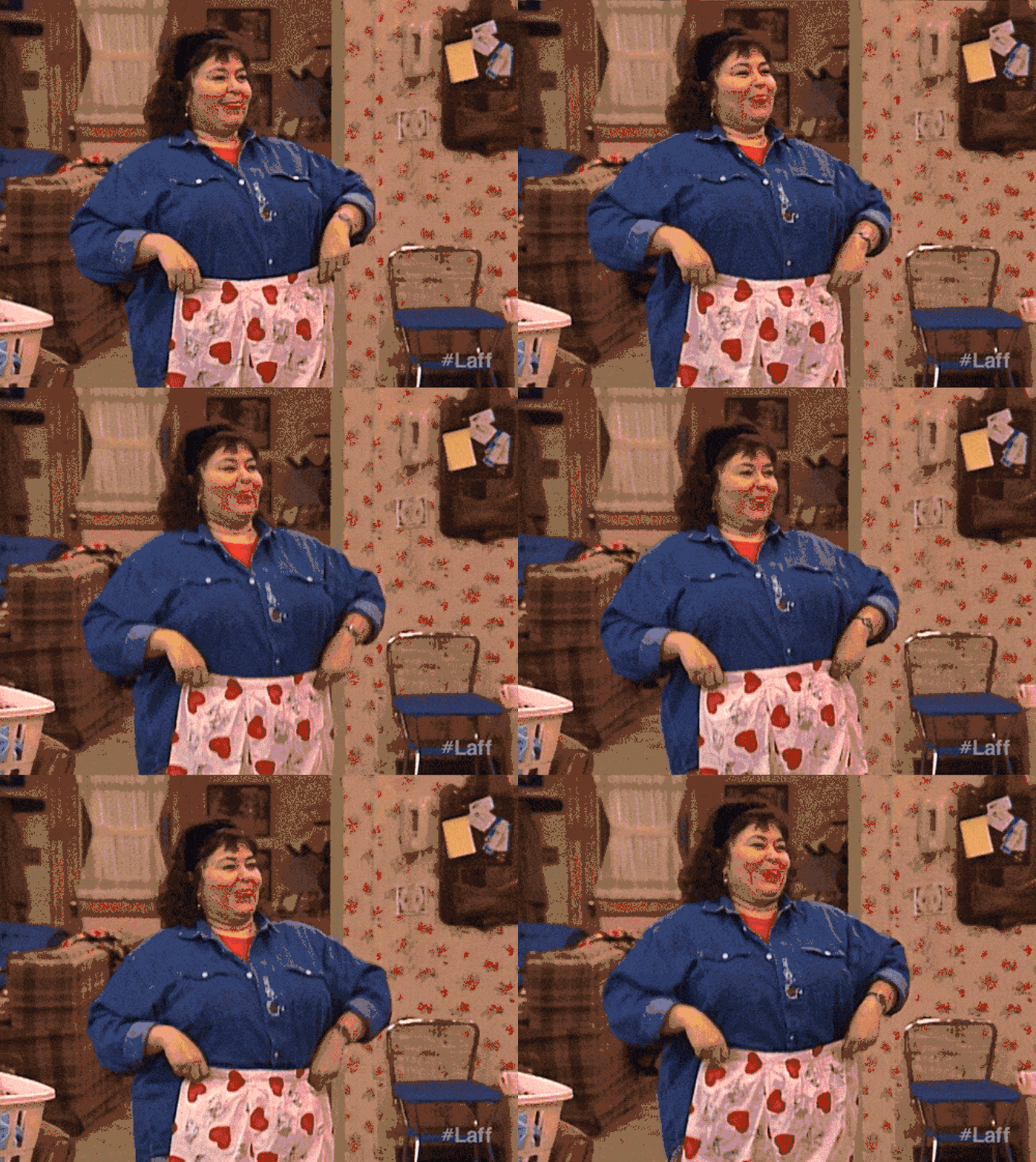
Source: Gifer
Even before I ever had kids, I knew I didn’t want to be a stay-at-home mom if given the choice. I have always been career focused and taken pride in earning my own money. Plus, as much as I enjoy spending time with my kids and cherish my identity as a parent, I don’t want that to be my entire personality.
Now that I have kids, it would be impossible for me to be a stay-at-home mom because, like many families living in the big city, we simply couldn’t afford it. The cost of housing, food, gas and transit, daycare and extracurriculars, clothes and birthdays — the list goes on — often depends on households having two incomes.
Gym, Childcare, Laundry
Three to four decades ago, families in North America lived a very different reality. In the ’80s and ’90s, the average age of a first-time mom was around 25 years old. For some women, that meant they barely had a chance to start their careers before settling down and having a baby. The cost of living was also remarkably cheaper then. Families could have more kids and sustain everyone on less money. Society maybe felt a bit more family-friendly.
My mom worked as a career hair stylist before she had me, her firstborn, and hired a nanny so she could return to work until she had my sister. She returned to work again for a few more years before “retiring” and becoming a stay-at-home mom. And then my parents had one more kid, my baby sister, so she really did have her hands full at home.
With my dad working full-time and often travelling for his job, almost all of the childcare and housework fell on my mom’s plate. She drove us to extracurriculars and friends’ houses, did all of the grocery shopping, cooked dinner every night, took care of the laundry, made all of our dentist and doctor’s appointments, and handled anything that came up at school. Somehow, she also had time for herself. She’d go to an aerobics class in the mornings, watch Oprah and What’s For Dinner? while painting her nails before school pickup and put on a face mask at night.
My mom would tell you she loved being a stay-at-home mom and wouldn’t have changed a thing. But growing up watching her life solely revolve around her husband, kids and our home made me realize I didn’t necessarily want to follow in her direct footsteps.
What Parents Are Trying Now


Did I Lean In a Little Too Hard?
Nowadays, nearly 70 percent of Millennial moms work outside the home. Many of us do because we want to and we have to in this economy. The shift in family dynamics has created an even greater demand on outsourced childcare, from daycares and nannies when kids are little, to aftercare once they’re in school.
The month after returning to work from my first maternity leave, I remember sitting at my desk missing my child, feeling guilty that he was in daycare, and questioning what I was doing. The career I had found so fulfilling before now sat in direct opposition to me spending time with my son. Of course, that feeling wore off as time went on and I saw how happy and cared for he was at his daycare but it did really make me question the idea that working moms can “have it all.” Most days, I felt like I was honestly trying to do too much.
Nowadays on social media, my algorithm will show me trad-wife influencers and stay-at-home moms sharing tips on how their families manage on a single income. On the other hand, I still follow bona fide #Girlbosses like Emily Weiss and Eva Chen (I am a Millennial woman, after all). Truthfully, like most Millennial parents, I fall somewhere in the middle — and as a result, have a more egalitarian partnership with my husband. We both work jobs outside the house, and we both trade off picking up the kids and getting dinner on the table.
Around the Web
Things almost every mom did in the ’90s
BuzzFeed >Marla Sokoloff (aka bad-girl Gia on Full House) wins this trend
@marlasok (TikTok) >Why modern parenting feels impossible — and what to do about it
YouTube (@goodinside) >Kids today with their insulated Yetis and Stanleys don’t know how good they have it
Instagram (@nattyfaulks) >
Keep reading

What’s So Boring About a Restaurant Anyways?
Whenever we take our kids out to restaurants, half of my bag is usually filled with stuff to entertain them. Crayons and paper, stickers, Hot Wheels cars, fidget spinners, and a pre-meal snack – anything to keep toddlers cheerful and calm.…
Let’s Give Kids Space to Figure Things Out Themselves
It’s been a long morning and I’ve finally managed to get my two kids out of the house and to the park. m.…
Aren’t Kids’ Faces Already Flawless?
I’ve never had a complicated skincare routine — even when I really tried. In my 20s, I invested in a Clarisonic exfoliator, but eventually couldn’t stomach the cost and environmental impact of the little brushes I threw away every few months.…